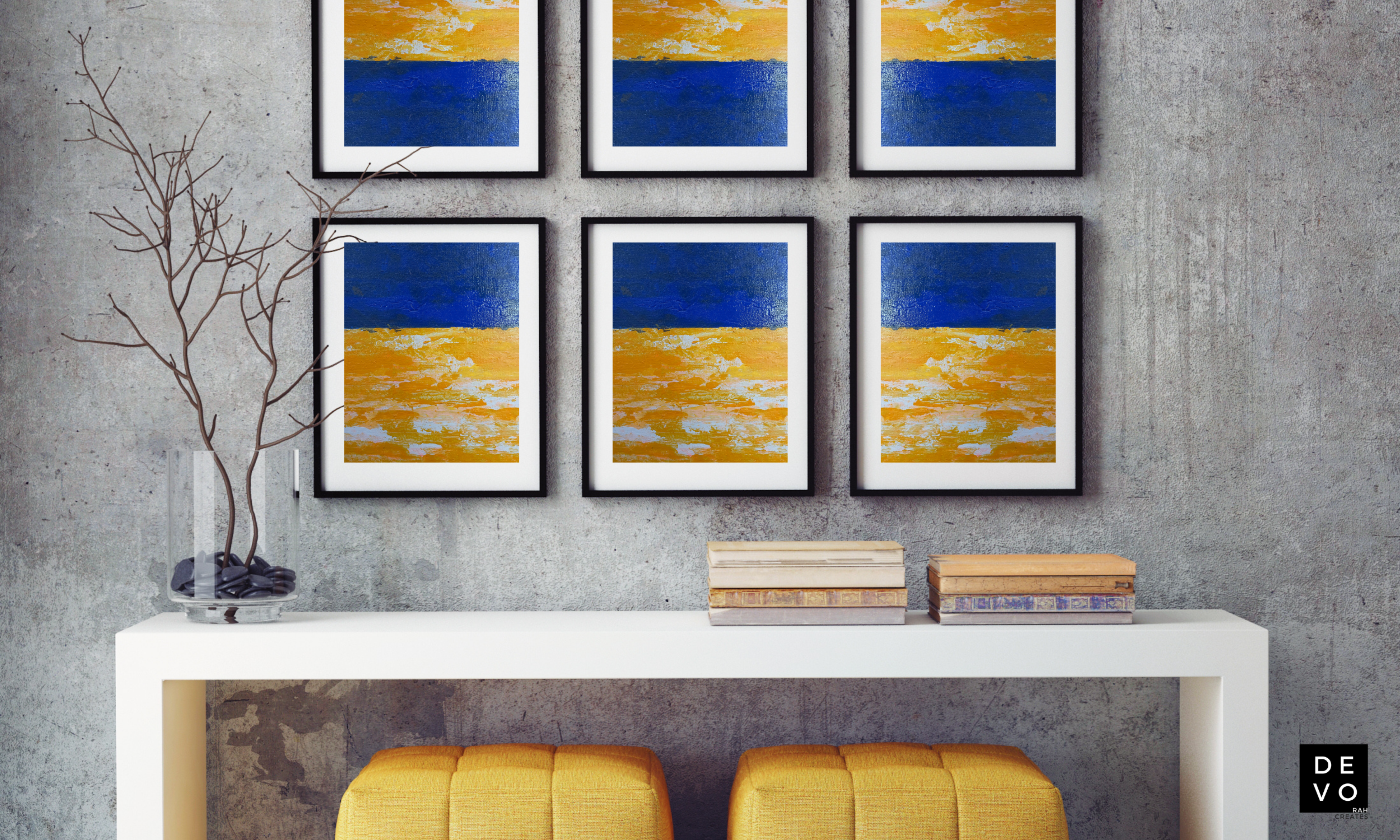
Why Neuroaesthetics Matters: Creating Spaces That Let the Mind Breathe
Okay, so here’s something I think about often…
Why do certain spaces just feel better?
Not in a Pinterest-perfect, overly styled kind of way—but in a deeper, almost unexplainable way. The kind where you walk into a room, exhale without realizing it, and think, “Ah… I can stay here for a while.”
That feeling isn’t random.
It’s not just good taste.
And it’s definitely not accidental.
It’s something science is starting to understand more clearly through a field called Neuroaesthetics—the study of how our brains and bodies respond to art, beauty, and visual experience.
And honestly? It confirms something many of us have always known intuitively:
>>> What we surround ourselves with matters.
>>> Not just visually—but neurologically.
Your Brain on Art (Yes, Really)
When we look at certain forms—especially those rooted in nature, repetition, and flow—our brains begin to relax.
Patterns.
Rhythms.
Familiar shapes.
These elements help the eye “land,” which in turn helps the mind settle. It’s why you might find yourself staring at the ocean…or tracing the veins of a leaf…or noticing the repetition in clouds, branches, or waves.
Your brain recognizes something it knows—even if you can’t quite name it. And in that recognition, something shifts.
You soften.
You breathe deeper.
You come back to yourself.
Why Abstraction Works So Beautifully
People often ask me why abstract art feels so different. Here’s the thing: